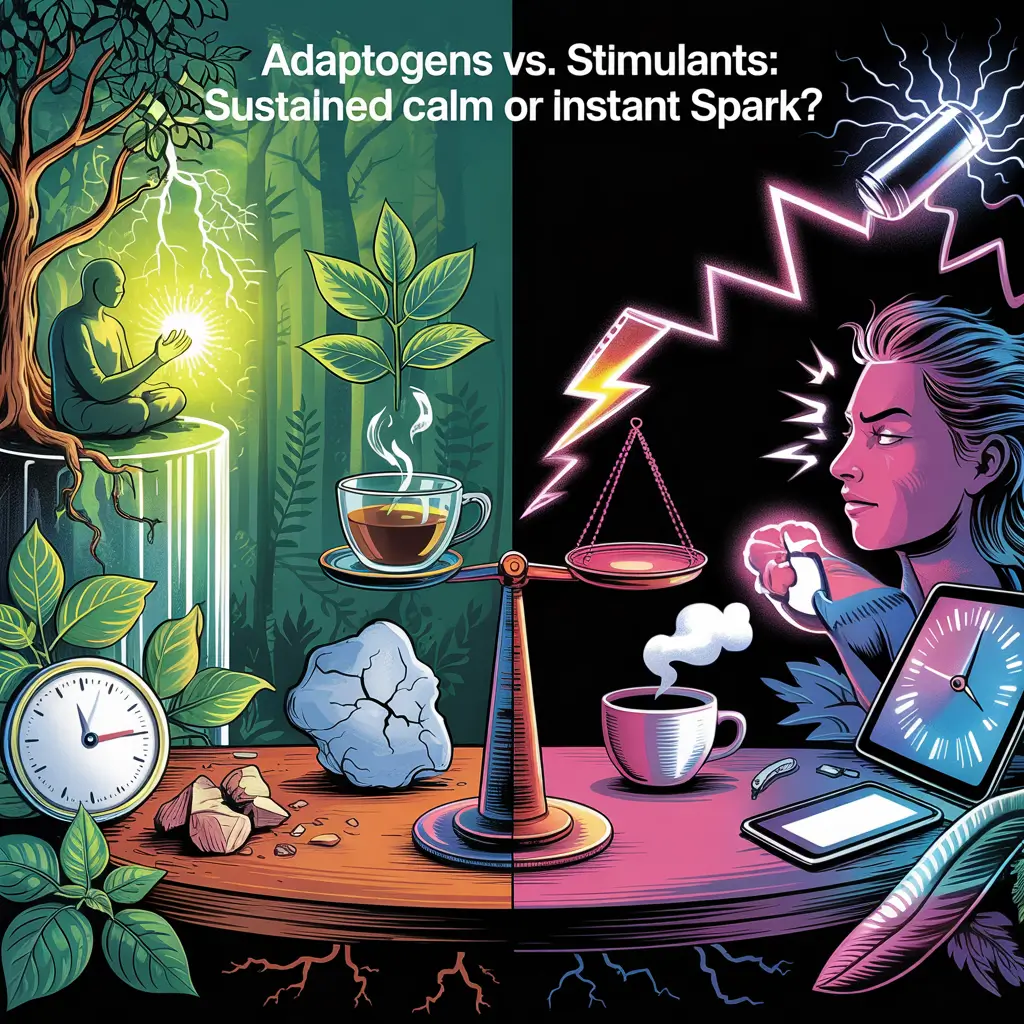
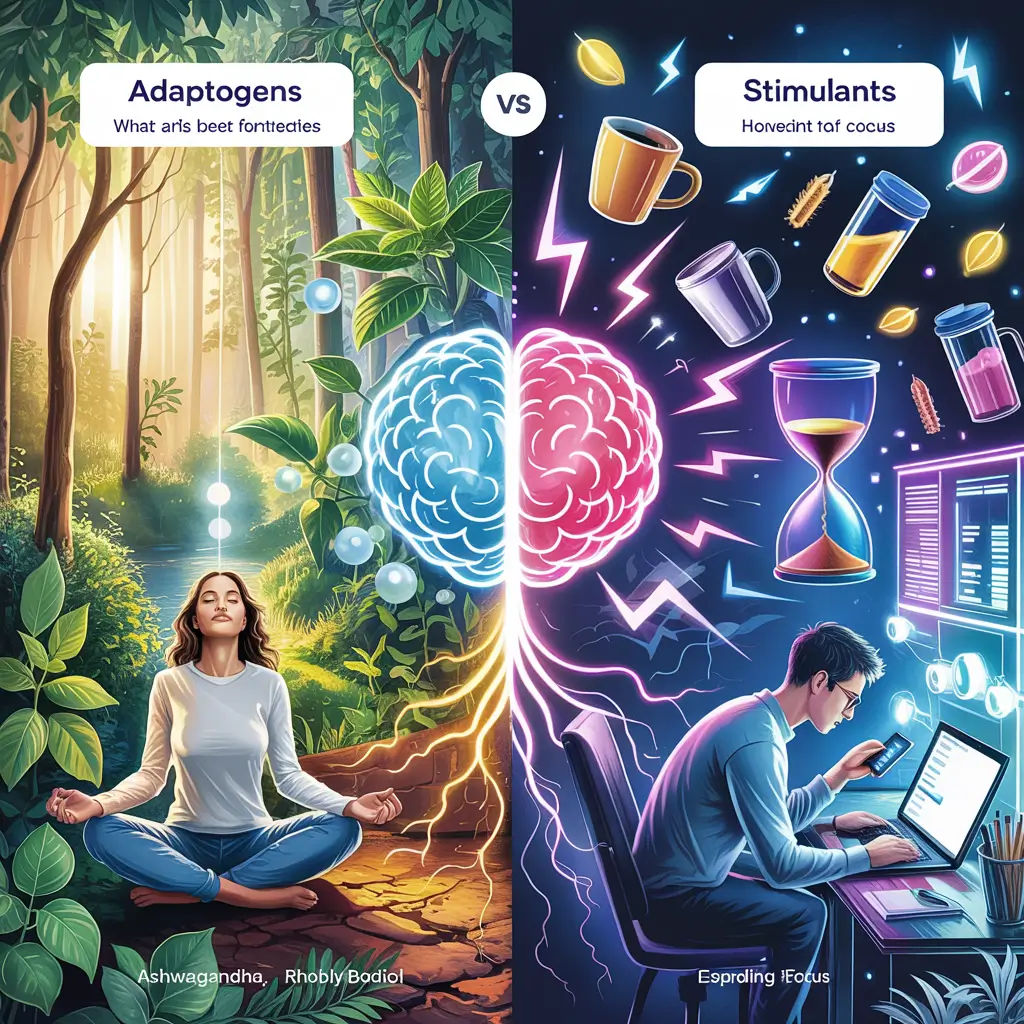
In today’s fast-paced world, the debate of adaptogens vs. stimulants is more relevant than ever. Whether you need natural stress relief or non-jittery energy for your busy day, understanding the differences between these approaches can lead to improvedholistic stress management and long-term cognitive health.
The modern lifestyle is marked by endless deadlines, constant connectivity, and the quest for quick fixes. Every day, millions of people grapple with choices that directly impact their energy levels, focus, and overall health. When deciding between adaptogens vs. stimulants, many wonder which option is best for sustainable energy and clear thinking.
Stimulants provide immediate bursts of alertness, but their side effects—like stimulant side effects, energy crashes, and even dependency—can undermine your long-term productivity. In contrast, adaptogens offer a promising path toward sustainable productivity and mental fatigue solutions without the harmful repercussions of conventional stimulants.
This article discusses everything you need to know about adaptogens vs. stimulants. We will explore what each category offers, the science behind them, and how they impact your energy, mood, and health. Along the way, you’ll also learn about herbal energy boosters, caffeine alternatives, and natural nootropics that may benefit your lifestyle. Let’s dive into the world where adaptogens vs. stimulants becomes a meaningful conversation about your well-being.
What Are Adaptogens vs. Stimulants?
When comparing adaptogens vs. stimulants, it’s important to start with clear definitions. These two groups of substances are often seen as opposite ends of the spectrum in boosting energy and managing stress.
Adaptogens
Definition: Adaptogens are natural, non-toxic substances, usually extracted from herbs and mushrooms, that help your body adapt to stress and restore balance.
Key Examples:
Ashwagandha
Rhodiola Rosea
Holy Basil (Tulsi)
Reishi Mushroom
Lion’s Mane
Benefits:
Provide natural stress relief
Act as herbal energy boosters
Support holistic stress management
Improve long-term cognitive health
Deliver non-jittery energy
Stimulants
Definition: Stimulants are compounds that provide a rapid increase in alertness by activating your central nervous system. They are often used as quick fixes to overcome fatigue.
Key Examples:
Caffeine (found in coffee, tea, and energy drinks)
Nicotine
Prescription medications such as Adderall and Ritalin
Benefits and Drawbacks:
Offer immediate energy boosts but often lead to stimulant side effects
May cause an energy crash, affecting sustainable productivity
Can lead to dependency and interfere with sleep
When weighing adaptogens vs. stimulants, one critical factor is how they influence your body over time. In the following sections, we explore the science behind these substances and why many are turning to adaptogens for a more balanced approach.
The Science Behind Adaptogens vs. Stimulants
Understanding the way adaptogens vs. stimulants work provides valuable insight into why one might prefer a natural approach to energy over quick pharmacological fixes.
Mechanisms of Action
Adaptogens
Stress Response Regulation: Adaptogens work by supporting the hypothalamic-pituitary-adrenal (HPA) axis. They help normalize cortisol, a key hormone involved in stress, thus providing natural stress relief and holistic stress management.
Energy Modulation: Instead of causing a spike in energy, adaptogens promote a steady level of vitality. By optimizing mitochondrial function, these substances delivernon-jittery energy—a hallmark for those who require sustainable productivity over the long haul.
Examples in Action:
Rhodiola Rosea enhances mitochondrial function to help combat mental fatigue.
Ashwagandha helps reduce cortisol levels, which aids in balancing the body’s response to stress.
Stimulants
Immediate Impact: Stimulants work by triggering the release of neurotransmitters like dopamine and norepinephrine. This results in an immediate boost in alertness, as seen with everyday caffeine consumption.
Short-Term Effects and Side Effects: While the short-term benefits of stimulants are tempting, the quick surge often results in problems such as stimulant side effects, including jitteriness, sleep disruption, and sometimes increased anxiety.
Examples in Practice:
Caffeine is renowned for giving an almost immediate sense of wakefulness but may ultimately lead to an energy crash.
Prescription stimulants, although useful in clinical settings, can affect mental fatigue solutions only temporarily and come with significant drawbacks.
Comparing the Two
When we ask adaptogens vs. stimulants, it isn’t just about speed. The real question is about what your body needs over time:
Adaptogens vs. Stimulants offer immediate activation versus long-term regulation.
For sustainable productivity, many health-conscious individuals favor adaptogens to avoid the rollercoaster of stimulant-induced peaks and valleys.
Herbal energy boosters like adaptogens help maintain steady energy without compromising sleep or causing dependency.
The science clearly shows that while stimulants might win the race in a sprint, adaptogens provide a marathon-winning pace for your mental clarity and overall wellness.
Benefits and Drawbacks: Adaptogens vs. Stimulants
The heart of the adaptogens vs. stimulants discussion lies in the benefits and drawbacks that each approach offers. Here, we break these points down clearly.
Benefits of Adaptogens
Sustainable Energy:
Delivers non-jittery energy
Promotes sustainable productivity
Supports long-term cognitive health
Stress and Anxiety Management:
Provides natural stress relief
Improves mood and resilience through holistic stress management
Fewer Side Effects:
Minimal risk of dependency
Often provide additional benefits like immune support and anti-inflammatory properties
Balanced Approach:
Instead of masking tiredness, they help address its root causes, offering effective mental fatigue solutions
Drawbacks of Stimulants
Short-Lived Effects:
Offer quick energy that fades fast
Often lead to energy crashes impacting sustainable productivity
Side Effects and Risks:
Common stimulant side effects include jitteriness, anxiety, and sleep disruption
Overreliance can lead to dependency and long-term health issues
Temporary Fixes:
Do little to address the underlying causes of fatigue or poor stress management
Might contribute to hormonal imbalances over time
Bullet Points for Quick Comparison
Adaptogens vs. Stimulants:
Adaptogens:
Gentle, long-term support
Improve natural stress management
Provide natural nootropics benefits
Stimulants:
Quick energy and alertness
Risk of stimulant side effects
May compromise sleep and overall health
This section reaffirms the value of choosing adaptogens for anyone who needs caffeine alternatives that support holistic stress management over time.
Real-Life Use Cases and Applications
Every day, people worldwide choose between adaptogens vs. stimulants. Let’s look at some real-life examples to understand how these choices translate into everyday life.
Case Study: The Office Worker
Scenario: An office worker who relies on multiple cups of coffee to keep working through the day might experience the well-known peak and crash phenomenon.
Stimulant Route:
Usage: Repeated caffeine consumption
Impact: Sudden surges of energy followed by crashes, sleep problems, and increased anxiety
Result: Reduced sustainable productivity and reliance on quick fixes
Adaptogen Approach:
Usage: Incorporating adaptogens like Ashwagandha and Rhodiola Rosea
Impact: Gradual build-up of energy, improved stress resilience, and fewer mood swings
Result: Consistent performance with natural stress relief and non-jittery energy
In the debate of adaptogens vs. stimulants, the office worker finds that adaptogens offer practical benefits for long-term mental fatigue solutions.
Case Study: The Student
Scenario: A college student who pulls all-nighters during exam season is tempted by stimulants to stay awake and focused.
Stimulant Route:
Usage: Energy drinks and high caffeine intake
Impact: Short-term alertness but severe crashes that affect studying and exam performance
Result: Increased stimulant side effects, such as jitteriness and insomnia
Adaptogen Approach:
Usage: Regular intake of adaptogenic herbs and mushrooms
Impact: Steady, clear-minded focus, improved memory retention, and balanced energy levels
Result: Enhanced long-term cognitive health and better overall performance
This case vividly illustrates why the conversation surrounding adaptogens vs. stimulants continues to be significant among those seeking herbal energy boosters and effective caffeine alternatives.
Practical Benefits
For Anyone Seeking:
Adaptogens vs. Stimulants: A balanced energy approach
Natural stress relief: Without unwanted side effects
Holistic stress management: That supports daily well-being
How to Incorporate Adaptogens for Lasting Results
Switching to adaptogens can be an excellent way to redefine your approach to stress and focus. Below are some practical tips to get started:
Tips for Incorporation
Start Slow: Introduce one adaptogen at a time. For example, begin with Ashwagandha or Rhodiola Rosea and monitor how your body reacts.
Consistency Is Key: Adaptogens are most effective when taken regularly. Give them 2–4 weeks to build up in your system for optimal natural stress relief.
Combine for Synergy: Many users find that combining adaptogens with low doses of caffeine (as caffeine alternatives) creates a balanced energy boost without the downsides of high stimulant intake. This approach carefully navigates the debate of adaptogens vs. stimulants.
Listen to Your Body: Adjust dosages based on your response. Over time, you’ll learn whether you need more emphasis on adaptogens or if a brief stimulant boost is necessary on particularly taxing days.
Practical Recipes and Routines
Morning Routine: Start your day with a warm adaptogenic latte made with Ashwagandha. This can set the tone for sustainable productivity throughout your day.
Bullet Points Recipe:
1 teaspoon of Ashwagandha powder
Your favorite milk (dairy or plant-based)
A pinch of cinnamon for extra flavor
Honey or maple syrup to taste
Enjoy this as a daily ritual to experience the gradual benefits of adaptogens vs. stimulants.
Midday Pick-Me-Up: Instead of reaching for another cup of coffee, opt for a Rhodiola Rosea tincture. This supports a smoother transition in energy levels.
Evening Wind-Down: Use calming adaptogens like Holy Basil to help regulate your cortisol levels for improved sleep and relaxation. This contributes to better mental fatigue solutions and overall well-being.
Adaptogens vs. Stimulants: A Comparison Table
Here is a quick-reference table that highlights the key differences when considering adaptogens vs. stimulants:
Criteria
Adaptogens
Stimulants
Primary Function
Regulate stress and restore balance
Provide immediate energy and focus
Onset Time
Gradual (days to weeks)
Immediate (minutes)
Duration of Effect
Long-term, sustainable
Short-lived, often followed by an energy crash
Energy Boost Type
Balanced, non-jittery energy
Sharp surge followed by potential crashes
Impact on Stress
Promotes natural stress relief and holistic management
Tends to elevate stress in the long term
Dependency Risk
Minimal dependency
Higher risk of stimulant side effects and dependency
Cognitive Benefits
Supports long-term cognitive health
Temporary focus boost, can lead to mental fatigue
Common Examples
Ashwagandha, Rhodiola, Holy Basil, Lion’s Mane
Caffeine, Adderall, energy drinks
This table underscores the advantages of choosing adaptogens over stimulants for those who seek herbal energy boostersand a consistent, healthy approach to energy and focus.
Internal Resources
For more information on the benefits of natural approaches and ways to enhance your well-being, check out these helpful resources:
Discover practical tips for a healthier lifestyle on How to Quit Caffeine, which provides actionable advice for reducing your reliance on stimulants.
These resources further elaborate on points raised in the adaptogens vs. stimulants discussion and offer additional insights into creating a balanced, healthy lifestyle.
Lifestyle Integration: Creating Your Daily Routine
Integrating the concepts of adaptogens vs. stimulants into your everyday life is essential for achieving long-term wellness. Below are steps and tips to build a daily routine that maximizes energy and focus naturally:
Step-by-Step Daily Plan
Morning Kickstart:
Begin with a warm adaptogenic beverage.
Use a blend that includes Ashwagandha for natural stress relief and herbal energy boosters.
Example Recipe:
1 tsp Ashwagandha powder
Warm almond milk
A dash of cinnamon and honey
This ritual sets the stage for a day where adaptogens vs. stimulants are addressed with balance.
Mid-Morning Boost:
If you feel a dip in energy, opt for a small dose of green tea paired with Rhodiola.
The combination provides a gentle lift without the harsh side effects often seen with stimulants.
Benefits: Increased focus, non-jittery energy, and a steady release of vitality.
Afternoon Maintenance:
Replace your regular coffee break with an adaptogenic snack or tincture.
This could include a Rhodiola tincture or a snack bar enriched with natural nootropics.
This strategy supports the philosophy of adaptogens vs. stimulants, emphasizing endurance and holistic stress management.
Evening Wind-Down:
In the evening, incorporate calming adaptogens such as Holy Basil to help your body transition to a state of rest.
Consider drinking a decaffeinated herbal tea that also aids sleep, further reducing stimulant side effects and promoting long-term cognitive health.
Quick Bullet Summary for Daily Use
Morning: Adaptogenic latte for steady energy
Mid-morning: Green tea with Rhodiola for focus
Afternoon: Adaptogenic snack for continued vitality
Evening: Calming herbal tea to support restful sleep
This routine addresses the ongoing debate of adaptogens vs. stimulants by integrating nature-based solutions to keep you energized throughout the day without the need for harmful quick fixes.
In-Depth Look at Common Adaptogens
Let’s examine some of the most popular adaptogens in the context of adaptogens vs. stimulants.
Ashwagandha
What It Is: An Ayurvedic herb used for centuries to enhance vitality and lower stress.
Key Benefits:
Reduces cortisol levels for natural stress relief
Supports holistic stress management
Delivers balanced, calm energy without jitters
How to Use: Typically taken in capsule form or mixed into a warm beverage.
Role in Adaptogens vs. Stimulants: Ashwagandha represents the calming end of the spectrum, offering long-term stability over the immediate kick provided by stimulants.
Rhodiola Rosea
What It Is: A herb known for enhancing stamina and mental clarity, often used by athletes and students alike.
Key Benefits:
Boosts mental energy gradually
Prevents the brain from experiencing sudden dips in focus
Acts as an effective natural nootropics supplement
How to Use: Available in tincture or capsule form, Rhodiola can be easily incorporated into daily routines.
Role in Adaptogens vs. Stimulants: Rhodiola exemplifies the balanced effect that defines adaptogens vs. stimulants, offering a steady improvement in cognitive function over time.
Holy Basil (Tulsi)
What It Is: A revered herb in traditional medicine known for its calming properties.
Key Benefits:
Promotes relaxation and natural stress relief
Supports immune health
Provides holistic stress management without affecting sleep
How to Use: Commonly brewed as a tea or taken as an extract.
Role in Adaptogens vs. Stimulants: Holy Basil is ideal for those who want to avoid the negative impact of stimulants while still staying alert and calm.
Lion’s Mane Mushroom
What It Is: A unique mushroom credited with enhancing nerve growth and cognitive function.
Key Benefits:
Enhances memory and concentration, contributing to long-term cognitive health
Acts as a potent natural nootropics
Provides consistent energy with minimal side effects
How to Use: Consumed as a supplement or blended into foods and beverages.
Role in Adaptogens vs. Stimulants: Lion’s Mane offers a safe, natural alternative in the adaptogens vs. stimulants debate, especially for those looking for cognitive enhancement without the risk of dependency.
Advanced Strategies: Combining Adaptogens and Stimulants
While the debate of adaptogens vs. stimulants might seem like an either-or decision, many health enthusiasts opt for a hybrid approach. Here’s how you can strategically combine both:
Benefits of a Hybrid Approach
Balanced Energy: Use adaptogens to build a strong foundation for sustainable productivity and layer stimulants for occasional bursts when high focus is needed.
Reduced Risks: The adaptogen component can help mitigate stimulant side effects, such as energy crashes and dependency.
Targeted Application: This strategy allows you to have immediate focus in urgent moments, while your baseline remains supported by adaptogens.
How to Implement a Hybrid Routine
Morning: Start with an adaptogenic drink (e.g., Ashwagandha latte) to set a balanced energy tone.
Before High-Pressure Tasks: Add a small dose of a stimulant like caffeine. Combining it with adaptogens such as Rhodiola (or adding L-theanine) can minimize jitters and offer non-jittery energy.
Post-Task Recovery: After a period of intense focus, return to a routine fortified with adaptogens to gradually restore balance.
Bullet List of Hybrid Tips
Begin your day with adaptogens.
Use stimulants sparingly during peak demand.
Combine caffeine with adaptogens for a balanced lift.
Always revert to adaptogens for recovery and long-term energy maintenance.
This approach to adaptogens vs. stimulants acknowledges that sometimes a quick fix is necessary—but it also champions long-term, sustainable methods.
Addressing Common Concerns
When planning your strategy in the realm of adaptogens vs. stimulants, you might have several questions. Here are some common concerns along with clear, concise answers:
Concerns and Answers
Concern: “Will using stimulants ruin my sleep schedule?” Answer: Yes, relying exclusively on stimulants can disrupt your sleep. Adaptogens are an excellent caffeine alternative that promote restful sleep and holistic stress management.
Concern: “How soon can I see the benefits of adaptogens?” Answer: Adaptogens generally take about 2–4 weeks of consistent use to show noticeable effects. Their gradual build-up is a key difference in adaptogens vs. stimulants.
Concern: “Are there any dangerous interactions if I combine these substances?” Answer: It is always best to consult with a healthcare professional. However, many find that a well-planned hybrid approach minimizes the risk of stimulant side effects while still boosting sustainable productivity.
Concern: “I need quick focus for an exam—should I rely on stimulants?” Answer: For an immediate boost, stimulants can help, but be wary of the crash. Consider using adaptogens regularly so that on exam day you require less reliance on stimulants for temporary focus, which fits within the adaptogens vs. stimulants framework.
Conclusion
In the modern dialogue of adaptogens vs. stimulants, there is no one-size-fits-all answer. If you desire steady, non-jittery energy, consistent natural stress relief, and improved long-term cognitive health, adaptogens are a powerful ally. Conversely, stimulants do provide immediate alertness but come with drawbacks, including stimulant side effects and the risk of energy crashes.
To sum up:
Adaptogens vs. stimulants is not simply a choice between nature and chemicals—it’s a balance.
For sustainable productivity and holistic stress management, adaptogens prove their worth day after day.
A hybrid approach may offer the best of both worlds, allowing you to use stimulants during high-demand moments while relying on adaptogens for a steady baseline.
In your journey toward better focus and health, consider experimenting with adaptogens, remaining mindful of how your body responds. Embrace strategies that provide mental fatigue solutions and optimize your overall well-being.
Remember, whether you’re choosing adaptogens vs. stimulants for academic success, professional productivity, or just better overall health, the key is to adopt practices that support your lifestyle for the long run.
FAQs
What are the main differences in how adaptogens vs. stimulants work?
Adaptogens work by modulating your body’s stress response. They help balance cortisol and support overall health. In contrast, stimulants quickly boost alertness by increasing neurotransmitter levels but can lead to stimulant side effects like energy crashes and sleep disruption.
Can I combine adaptogens with stimulants?
Yes, a balanced approach is possible. Many people use adaptogens daily for holistic stress management and reserve stimulants for specific high-pressure situations. This method of adaptogens vs. stimulants can help in maintaining sustainable productivity while minimizing risks.
What are some natural alternatives to caffeine?
Adaptogens such as Ashwagandha, Rhodiola Rosea, and Holy Basil serve as excellent caffeine alternatives. They provide non-jittery energy and promote natural stress relief without the drawbacks of conventional stimulants.
How long does it take to see results with adaptogens?
Adaptogens require consistent use for several weeks (typically 2–4 weeks) to build up and deliver noticeable benefits. Their gradual effect is a key reason why the adaptogens vs. stimulants debate emphasizes long-term benefits over immediate results.