Physical Address
304 North Cardinal St.
Dorchester Center, MA 02124
Physical Address
304 North Cardinal St.
Dorchester Center, MA 02124

Discover the science behind neuroplasticity and how you can actively rewire your brain to enhance focus, mood, and memory—naturally. From brain-friendly foods to powerful mental exercises, this guide offers practical, research-backed strategies for lifelong cognitive wellness.
The human brain is not a fixed organ—it’s a constantly evolving network capable of incredible change. This remarkable ability, known as neuroplasticity, allows your brain to form new neural connections and reorganize itself in response to experiences, learning, and even trauma. Far from being static, your mind is highly adaptable—and you can harness this flexibility to improve brain function naturally.
Understanding how to rewire your brain is a game-changer for enhancing focus, mood, and emotional resilience. Whether you’re seeking better productivity, greater mental clarity, or emotional balance, simple, consistent practices rooted in neuroscience can make a lasting impact.
In this article, we’ll explore the science of brain rewiring, dive into effective neuroplasticity exercises, and share brain-boosting habits to help you take control of your mental well-being. If you’ve ever wondered whether change is truly possible—your brain says yes.
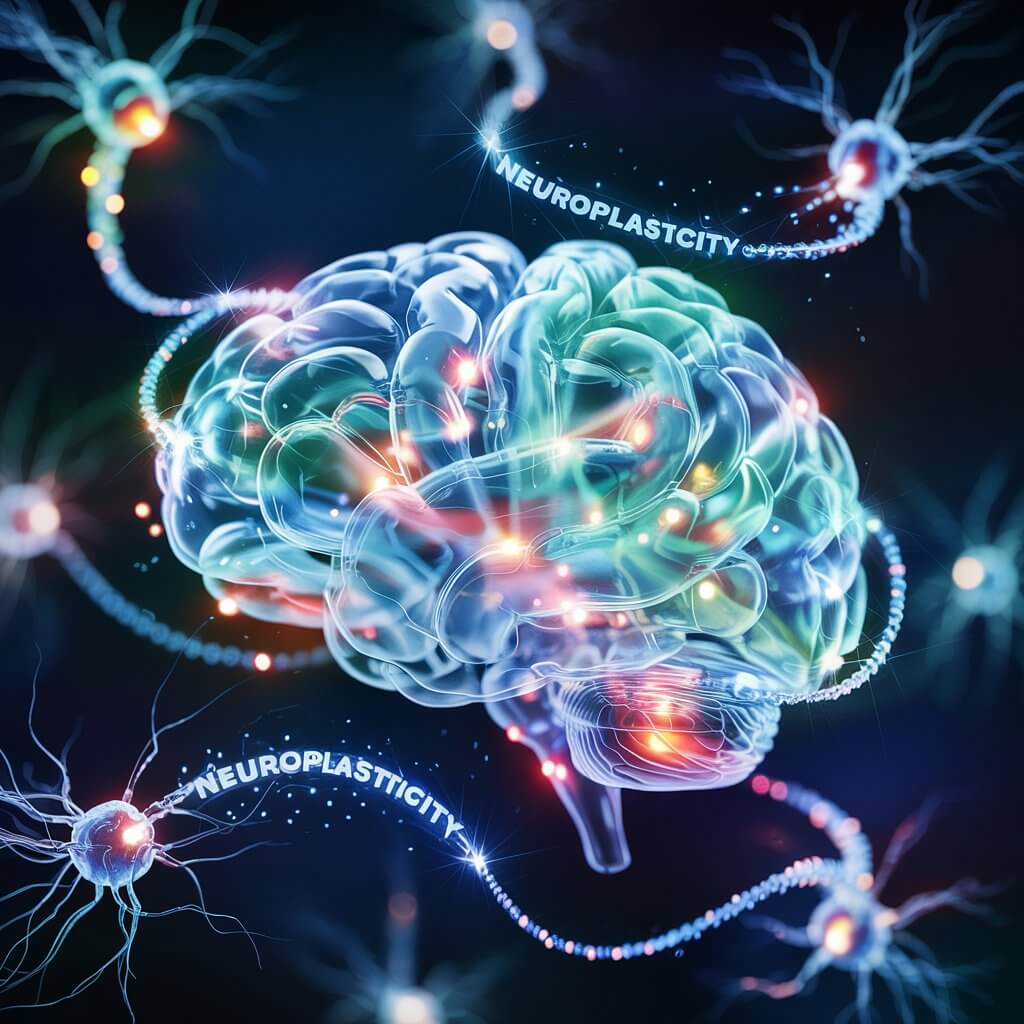
At the core of human adaptability lies the brain’s ability to change itself—what scientists call neuroplasticity. This powerful mechanism refers to the brain’s capacity to reorganize neural pathways based on new experiences, behaviors, environments, and even injuries. Simply put, your brain isn’t hardwired—it’s constantly rewiring itself.
Within the complex architecture of the human brain reside approximately 86 billion neurons, each interconnected through trillions of synapses. These connections are the fundamental building blocks that give rise to our thoughts, memories, emotions, and behaviors. As we learn or practice new skills, certain synaptic pathways that are activated become reinforced, while others that are neglected gradually weaken—a phenomenon known as synaptic pruning. This adaptive process is the brain’s way of optimizing itself for efficiency and functionality.
The brain also employs a process known as long-term potentiation (LTP), a cellular mechanism that strengthens the connections between neurons—the synapses—when they are frequently used. This means that through consistent repetition, such as practicing meditation, maintaining a journal, or acquiring a new language, our brains are not just storing information; instead, they are effectively rewiring themselves to enhance our focus, resilience, and overall cognitive performance.
Our brains are sculpted not only by our genetic predispositions but also profoundly by our lived experiences. Engaging in novel challenges—whether it’s learning to play a musical instrument, partaking in physical activities, or fostering mindfulness—encourages the brain to forge new neural pathways. As we practice and repeat these activities, the connections we cultivate transform from mere roads into wide highways of neural communication.
For instance, extensive research has uncovered fascinating revelations about the brain adaptability of London taxi drivers, who are required to navigate complex city layouts. Studies have indicated that these drivers demonstrate an enlarged hippocampus—a brain region integral to memory processing. In parallel, individuals recovering from strokes have shown remarkable improvements in their motor skills through dedicated therapeutic exercises, which activate alternate neural circuits and highlight the brain’s incredible capability to adapt and relearn.
Cognitive Flexibility and Brain Rewiring Cognitive functionality is intricately tied to neuroplasticity, wherein cognitive flexibility plays a quintessential role. Abilities such as agile thinking, emotional regulation, decision-making, and creative problem-solving all hinge on the pliability and responsiveness of the brain’s neural networks. This adaptability is vital in the fast-paced, high-pressure environment of modern life, where stress, distractions, and information overload are pervasive.
Engaging consistently in neuroplasticity exercises, which include practices like focused attention, techniques for deep breathing, or tackling complex problem-solving tasks, effectively trains your brain to become more resilient and adaptable. Over time, individuals who undertake these exercises can experience notable advancements in memory retention, improved emotional management, and sharper, clearer cognitive functions.
A 2014 study published in Nature Neuroscience emphatically demonstrated that the act of learning new skills not only engages cognitive processes but also significantly augments the density of gray matter throughout the brain. Furthermore, credible findings from Harvard Medical School have illustrated that engaging in mindfulness meditation can lead to tangible changes in brain structure—specifically, an increase in the cortical thickness of the prefrontal cortex, an area critically linked to decision-making and attention span.
Such evidence reinforces the understanding that when individuals consciously engage in the practice of rewiring their brains, they are not merely altering their thought processes; they are enacting profound transformations within the very biological architecture of their brains. These changes are not superficial; rather, they are embedded within the cortex, optimizing how we think, feel, and respond to our surroundings.
You don’t need expensive supplements or extreme routines to nurture your brain. In fact, some of the most effective ways to improve brain function naturally start with what’s on your plate and how you move your body. Science continues to show that daily lifestyle habits can directly influence neuroplasticity and support long-term cognitive function.
The brain is a high-energy organ that consumes about 20% of your daily caloric intake, so it’s no surprise that nutrition plays a key role in brain rewiring and mental clarity.
Including these foods regularly in your meals is a foundational step to improve brain function naturally and increase mental energy throughout the day.
Physical activity is one of the most reliable ways to promote brain rewiring. Cardiovascular exercise like walking, cycling, or dancing increases blood flow to the brain and stimulates the release of brain-derived neurotrophic factor (BDNF)—a protein that encourages the growth of new neurons and synapses.
Research shows that just 20–30 minutes of moderate aerobic exercise can boost memory, processing speed, and emotional regulation. Over time, regular movement enhances your brain’s plasticity and contributes to greater mental resilience.
Strength training, balance exercises, and practices like yoga and tai chi are also powerful because they combine physical movement with focus and breath, further reinforcing cognitive flexibility.
The key to neuroplasticity isn’t perfection—it’s consistency. Even small, manageable changes to your brain health diet and daily routine can spark profound improvements in your focus and mood over time.
Your brain is like a muscle—the more you train it, the stronger and more agile it becomes. With the right neuroplasticity exercises, you can literally rewire your brain to enhance focus, memory, mood, and emotional resilience. These exercises aren’t just trendy—they’re grounded in neuroscience and backed by decades of research.
Few activities are as potent for brain rewiring as mindfulness meditation. MRI scans show that consistent mindfulness practice increases gray matter in areas related to memory, self-awareness, and empathy, while reducing the size of the amygdala, the brain’s stress center.
Try these beginner-friendly practices:
Even 10–15 minutes a day can lead to significant neurological changes. According to Dr. Andrew Huberman, neuroscientist at Stanford University:
“Neuroplasticity is strongest when we are alert and focused. Meditation creates the ideal brain state to rewire our mental patterns.”
You can eat the right foods and challenge your mind daily, but without quality sleep and consistent mindfulness practices, your brain’s ability to grow and adapt may remain limited. Both rest and awareness are crucial pillars in the process of rewiring your brain and supporting lifelong cognitive function.
Sleep isn’t just a break from productivity—it’s when some of the most vital neuroplastic processes occur. During deep sleep and REM cycles, your brain consolidates memories, processes emotions, and performs what researchers call “synaptic housekeeping.” This involves the pruning of weak neural connections and the strengthening of those that matter.
A study published in Science found that during sleep, the brain flushes out toxins—like beta-amyloid proteins—that are linked to Alzheimer’s disease. This cleansing helps maintain mental clarity, improve mood, and protect long-term cognitive health.
Not getting enough sleep or experiencing fragmented rest can impair your ability to focus, learn, and regulate emotions. For optimal brain recovery, adults should aim for 7–9 hours of quality sleep per night.
Quick tips for brain-enhancing sleep:
Mindfulness is the practice of paying attention to the present moment with acceptance and without judgment. Far from being just a wellness trend, mindfulness has been shown to improve brain function naturally by reducing stress and increasing attention span.
Functional MRI studies have shown that regular mindfulness meditation thickens the prefrontal cortex (responsible for focus and decision-making) and shrinks the amygdala, which processes fear and anxiety. This structural shift reflects the power of brain rewiring in action.
Benefits of mindfulness for cognitive health:
Simple ways to incorporate mindfulness:
Your brain is far more adaptable than you’ve been led to believe. Through neuroplasticity, you can intentionally shape how you think, feel, and focus. Whether you’re aiming to boost memory, improve mood, or sharpen attention, you now have the tools to rewire your brain and enhance your life—starting naturally and sustainably.
Small daily shifts—from mindful eating and exercise to sleep optimization and focused brain training—make a huge difference. The best part? The changes are cumulative. Every mindful breath, every puzzle solved, every quality night of sleep helps reinforce healthier neural pathways and strengthens your cognitive function.
In a fast-paced world that demands mental clarity and emotional balance, nurturing your brain’s health isn’t just an option—it’s essential. Now that you understand how to improve brain function naturally, the next step is to practice consistently and remain curious about your mind’s capacity to evolve.
Neuroplasticity is the brain’s ability to reorganize itself by forming new neural connections. It allows you to adapt to new experiences, learn skills, recover from injuries, and improve mental functions like memory, focus, and mood.
Yes, by engaging in consistent habits like meditation, brain-training exercises, quality sleep, and healthy eating, you can reshape neural pathways to boost focus, emotional resilience, and mental clarity.
Some effective exercises include mindfulness meditation, learning new skills, memory recall games, dual n-back training, and logic puzzles. These help stimulate different regions of the brain and strengthen neural networks.
Nutrients like omega-3s, antioxidants, and B-vitamins found in foods like fish, berries, and leafy greens support the brain’s structural health and plasticity, enhancing cognitive performance and emotional balance.
It varies based on consistency and the types of habits you adopt. Some changes can begin in a few weeks, while deeper rewiring may take months of regular practice, especially with mindfulness and learning-based routines.


